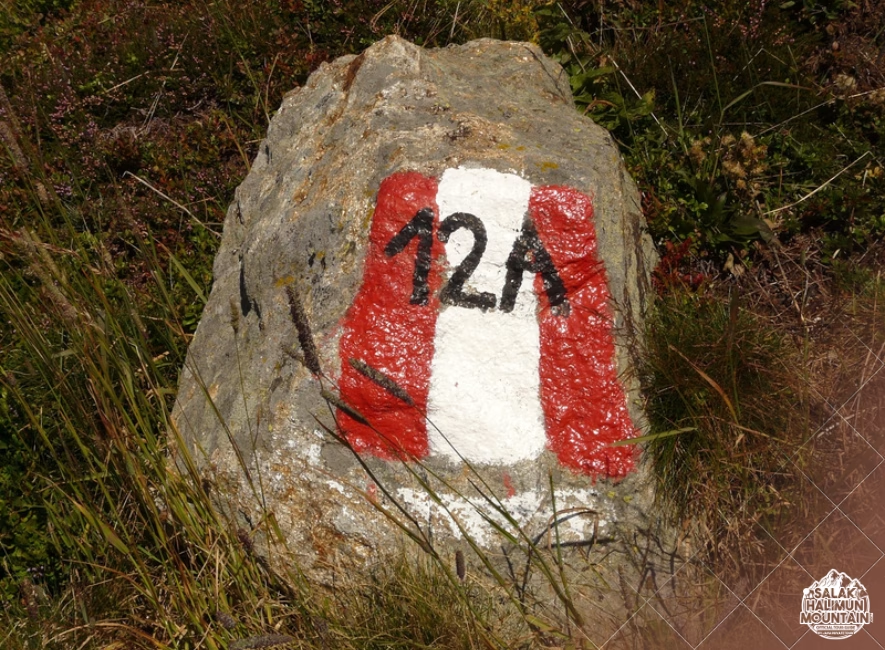
salakhalimunmountain.com – Trekking under the ancient rainforest canopy of Mount Salak and the expansive wilderness of Halimun is an immersive journey through a world dominated by vibrant green life. Sunlight filters softly through giant tree ferns, moss-covered branches, and dense layers of tropical foliage. While this lush environment creates a breathtaking wilderness atmosphere, it can also make finding the trail a unique challenge. Unlike open mountain ranges where paths are visible for miles, tropical rainforest trails are constantly changing. Learning the art of spotting subtle trail markers in dense canopies is an essential skill for navigating West Java’s high wilderness safely and confidently.
To an untrained eye, the rainforest floor can easily look uniform in every direction. Dense undergrowth, fallen palm fronds, and rapid plant growth can obscure a single-track path in just a few weeks. Furthermore, official wooden signs or bright painted markers are rare in deep national park interiors. Local guides and seasoned rainforest hikers rely instead on reading micro-cues left by previous trekkers, forest rangers, and the subtle ways human footsteps alter natural plant growth. By sharpening your situational awareness and learning what to look for, you can read the forest floor like an open book.
Reading Natural and Human-Made Trail Cues
In a dense rainforest, formal trail markers often take a backseat to subtle, functional indications left by local outdoor enthusiasts and forest managers. Knowing the distinct forms these indicators take will help you stay on course even when the path ahead seems to disappear into dense jungle foliage.
The most common artificial indicators you will encounter in Halimun Salak National Park are small colored plastic ribbons or surveyor’s tape tied to tree branches at eye level. These ribbons—often bright orange, neon pink, or red—are placed by forest conservationists and local guides to mark established routes. However, under a thick green canopy covered in epiphytes and climbing moss, even a bright ribbon can fade or blend into the surrounding leaves. Always scan both sides of the path at shoulder height, looking for unnatural geometric shapes or synthetic materials among the natural vegetation.
Identifying Blazes and Structural Modifications
In addition to plastic ribbons, keep an eye out for blazes—small, intentional bark notches or shallow cuts made on prominent tree trunks along the path. These clean, weathered notches expose the inner wood fibers of a tree, creating a visual beacon that lasts for years. While natural tree bark is rough and irregular, a blaze forms a distinct vertical or square mark.
Look out for simple structural trail markers like cairns—small, stacked piles of volcanic basalt rocks—and intentional branch clearings. In dense bamboo thickets or thick rattan patches, look for clean, angled cuts on hanging stems made by a machete (parang). A cleanly cut stem or a branch bent artificially at a sharp angle is a clear sign that humans have passed through and cleared a route.
Deciphering Ground-Level Micro-Tracks
When eye-level markers are sparse, your most reliable source of navigation lies directly at your feet. Heavy foot traffic alters the physical structure of the forest floor in subtle ways that remain visible long after hikers have passed through.
The primary ground indicator is soil compaction. Walking compresses the soft, sponge-like rainforest topsoil, creating a narrow corridor where leaves lay flat and damp earth is exposed. Off-trail forest floors, by contrast, feature loose, uncompressed leaf litter, delicate moss layers, and upright seedling growth. If the ground beneath your boots suddenly feels soft and springy, or if you find yourself stepping over undisturbed leaf beds, pause immediately—you may have strayed off the compacted path.
Noticing Root Wear and Mud Discoloration
Tree roots spanning across the trail offer excellent ground-level navigation cues. On an active trail, thousands of boot soles strip away the thin outer bark of exposed roots, leaving smooth, polished wood surfaces that stand out against the surrounding dark earth. Off-trail roots remain rough, dark, and thickly covered in moss or damp soil.
Similarly, pay attention to mud discoloration and scuff marks on wet clay slopes or volcanic rocks. Boot lugs leave distinct, linear compression marks and sharp edges in damp clay that differ completely from natural water erosion grooves. Noticing a fresh scuff mark on a wet stone or a mud splash on a low-lying leaf confirms that you are on the right line.
Developing a Scan-and-Verify Navigation Rhythm
Spotting subtle markers in a dense canopy requires a proactive mental approach. It is easy to fall into a hypnotic trance while watching your feet on steep, root-filled trails, but looking down continuously limits your field of vision and increases the chance of missing a key trail junction or subtle directional turn.
Adopt a dynamic 3-second visual scan rhythm. Spend two steps looking down at the ground directly in front of your boots to pick safe footholds, then lift your head on the third step to scan the trail ahead at eye level and into the mid-canopy. This regular scanning pattern lets you spot hanging ribbons, branch notches, and changes in path direction long before you overshoot a turn.
The Rule of Back-Checking
Whenever you reach an ambiguous junction, a dry riverbed crossing, or an area where fallen trees obscure the path, practice back-checking before moving forward. Turn around completely and look back down the trail you just hiked.
Notice what the path looks like from the reverse perspective. Check if there are clear ribbons, rock cairns, or distinct blazes visible for your return journey. Confirming your backward line gives you an immediate point of reference if you need to backtrack a few yards to re-verify the main path.
What to Do When the Line Becomes Unclear
Even experienced trekkers occasionally lose sight of subtle trail markers under dense canopy cover. How you react in the first three minutes of noticing an unclear trail makes all the difference in staying safe and on track.
The moment you realize you have not seen a trail ribbon, a compacted path, or a root scuff for more than fifty meters, stop moving immediately. Do not keep walking forward in the hope of stumbling back onto the path. Take a deep breath, sit down on a solid rock or root, and drink a sip of water to keep your mind calm and focused.
Executing a Systematic Backtrack
Once you are calm, mark your current position with a brightly colored object or your backpack. From that fixed point, look back in the direction you came from to spot the last confirmed trail marker or compacted foot track you passed.
Walk slowly back along your exact footsteps to that last confirmed marker. Nine times out of ten, you will discover that the main trail took a sharp turn around a fallen log, crossed a hidden stream bed, or veered away from an animal track while you were looking down at your footing. Re-establishing contact with the known trail ensures you never wander blindly into dense wilderness.
Respecting the Wilderness and Leaving Clear Traces
Understanding trail markers also comes with a responsibility to keep the wilderness clean and accessible for others. Never remove, damage, or misplace existing ribbons, blazes, or cairns set by national park rangers. These markers are vital safety lifelines for everyone exploring the park.
If you use temporary marking tape for safety during an exploratory trek, always collect your ribbons on the way back to practice Leave No Trace ethics. By honing your observation skills, paying close attention to environmental cues, and moving mindfully through the forest, you can navigate the magnificent dense canopy of Mount Salak and Halimun with confidence, safety, and deep respect for the natural world.
So, if you’re ready to explore the wonders of Mount Salak Halimun, head over to our ONLINE BOOKING PAGE and let’s start planning your adventure. Or simply CLICK THIS LINK to chat with us on WhatsApp.
With our team, you’re not just getting a guide; you’re gaining a local friend who will ensure your trip is nothing short of extraordinary.